

Service
Water Heater Services in Malibu, CA
No hot water, a tank that leaks, a pilot that will not stay lit, a heater that is simply near the end of its life. We repair, replace and install tank and tankless water heaters, gas and electric, including the earthquake bracing California calls for.
- Tank and tankless
- Gas and electric
- Repair, replacement and installation
Water Heater Services
Repair or replace: what usually decides it
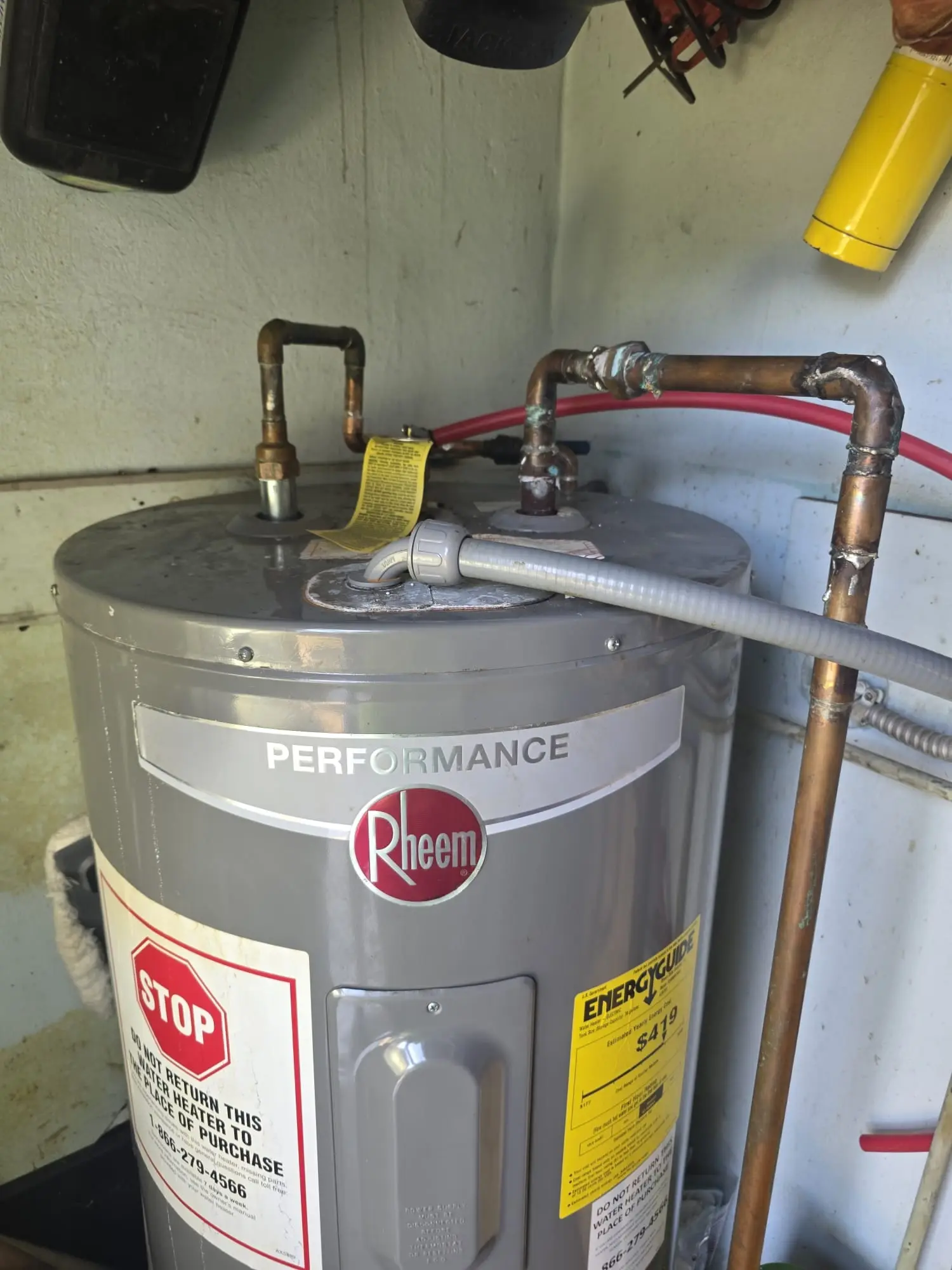
A tank water heater is a steel tank with a heat source and a rod, the anode, that is meant to corrode in place of the tank. When the anode is used up, the tank itself starts to corrode, and in the end it leaks. Heating elements, thermostats, gas valves and thermocouples wear out too, and those are usually worth replacing. Water on the floor can come from a fitting or the relief valve, which can be repaired, or from the tank, which cannot.
Age matters, and the label shows it: the serial number carries the manufacture date. Tank heaters commonly last 8 to 12 years, shorter or longer depending on the water and the care they get. A heater near that age with a failed part is where replacement tends to make more sense. A younger one is usually worth repairing.
- No hot water, or hot water that runs out much sooner than it used to
- Rumbling, popping or knocking from the tank, often a sign of sediment
- Water around the base of the tank, or dripping from the relief valve pipe
- A pilot light that will not stay lit, or a burner that will not ignite
- A breaker that trips when the heater tries to heat
How the work is done
How we handle Water Heater Services
Diagnose before recommending
Many heaters that seem dead need a thermostat, an element, a thermocouple or a valve, not a new tank. The failed part is identified first, so replacement is a choice and not an assumption.
Safety parts set up properly
The relief valve and its discharge pipe, the shutoff valve and the earthquake bracing are part of the installation, not extras.
Matched to the house
Tank size or tankless capacity is matched to the number of bathrooms, to how often hot water runs in two places at once, and to the gas or electrical supply that is already there.
The options explained plainly
You hear what failed, whether repair or replacement makes sense, and what each option changes in the house, before anything is ordered.
Tank, tankless, gas, electric: what changes
A tank heater stores heated water and keeps it hot. A tankless heater heats water as it passes through, so it does not run out mid-shower, but its capacity is limited by how much water it can heat at once. Gas units need a gas line of the right size, a vent and a supply of air. Electric units need a circuit with enough capacity, and some tankless units need more than an older panel provides.
Swapping a tank for a tankless unit is more than swapping a box. The vent, the gas line size, the electrical supply, the condensate drain and the water quality can all change the job, and what applies depends on the home. Reviewers on our Google profile mention a tankless installation and good communication during it.
What a proper installation includes
California requires water heaters to be braced against earthquakes, and a new installation includes that bracing. The relief valve is the safety device: it opens if the tank overheats or over-pressurises, and it must never be capped or plugged. A relief valve that drips again and again is worth having looked at, because it often points to thermal expansion or high water pressure.
- Earthquake strapping or bracing sized for the heater
- A temperature and pressure relief valve with a discharge pipe routed to a safe place
- A shutoff valve on the cold water supply to the heater
- Unions or dielectric fittings where copper meets steel, which slow corrosion
- An expansion tank where the home's water system calls for one
- A permit and inspection where the local building department requires them
Salt air, closets and exposed fittings
Along the coast, salt air attacks anything exposed. A heater in a garage, a side yard closet or an exterior utility closet sees more of it than one inside the house, and the fittings, connectors and the top of the tank are where the corrosion shows first. Replacing a corroded valve or connector before it fails costs much less than a leak.
Water heaters often sit in tight closets, which affects what can be installed and how it is vented. Measuring the space and the vent path is the first step of any replacement.
Questions
Water Heater Services questions
How long does a water heater last?
A tank heater commonly lasts somewhere between 8 and 12 years, and sooner when the water is hard or the unit is exposed to salt air. Tankless units are often rated for longer. The serial number on the label carries the manufacture date, which tells you where yours is on that scale.
Does a water heater need to be flushed?
Manufacturers generally recommend draining some water from a tank heater now and then to carry off sediment, and tankless units need periodic descaling where the water is hard. How often depends on the unit and the water, so follow the manual for your model.
What does water dripping from the relief valve pipe mean?
It can mean the water is expanding as it heats and has nowhere to go, that the water pressure in the house is too high, or that the valve itself is worn. It is a safety device, so do not cap the pipe. Have the cause found.
Is a tankless water heater always the better choice?
No. A tankless unit gives a steady supply and takes up less room, but the cost, the gas or electrical work it needs and the vent can outweigh that in a given house. Whether it suits you depends on the house and how hot water is used.
More services
Other services we provide
Water heater not working? Call and tell us what it is doing.
Call us or send the form. Tell us what you see and we will explain the next step.
Get in touch
Request service
Fill out the form and we will call you back.